| |
| Wednesday 11 November 2026 |
| Gateway to the World: Lisbon and the Art of Empire |
| Dr Isabelle Kent |
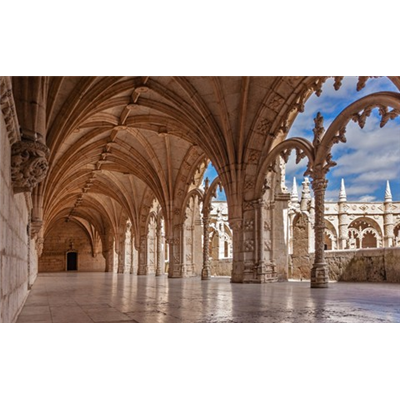 |
When Vasco de Gama set sail from the port of Lisbon in 1497, he was leaving one of the great Gothic jewels of Europe. When he returned, he brought with him the world. With the Age of Exploration came wealth, power and an empire that spanned four continents. This lecture looks at some of the extraordinary treasures that came to Lisbon, and how the art and particularly the architecture of Lisbon responded. Isabelle is an academic and educator specialising in the baroque, with a particular focus on Spain and its empire. She received a BA and MPhil in History of Art from Trinity College, Cambridge, where she recently completed her PhD on the art of Diego Velázquez and Francisco de Zurbarán. She has worked as a curator at the Wallace Collection and in 2020 her book Collecting Bartolomé Esteban Murillo in Britain and Ireland, was published. Isabelle is an expert guide for a travel company, leading groups around Spain and beyond, and she also teaches regularly for the V&A, Art Fund, Royal Academy, Chelsea Arts Club, Wallace Collection and University of Cambridge. |
|
| Wednesday 9 December 2026 |
| Riviera Paradise: Art, Design and Pleasure in the 1920's |
| Mary Alexander |
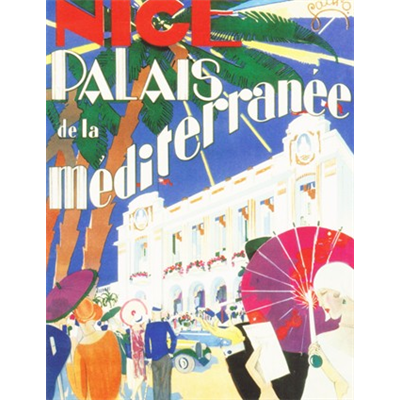 |
Since the 19th century English high society had 'wintered over' on the Côte d'Azur, but in the early 1920s an intoxicating mix of artists, writers, musicians, inspired by a mythological seascape of luminous colours, created a new summer season. This liberating playground of ideas across the visual design arts was stimulated by impresarios Serge Diaghilev and Paul Poiret. Traditional boundaries were torn down; Matisse, Picasso, Dufy, Cocteau, and Chanel merged the worlds of fashion, theatre and interiors. Mary Alexander trained as an art historian and graduated with a BA Hons and MA in History & History of Art. Her background combines an unusual blend of academic and communications skills and experiences, including lecturing to various arts organisations, working with design professionals on special events and publications, and writing on various aspects of the history of art and design. She has been a curator at Platt Hall, the Gallery of English Costume and has lectured at the University of Leeds, University of Manchester, the Open University, and as a visiting lecturer at Christies Education; also at various arts, heritage and antiquarian societies, throughout the UK, Europe, Australia and New Zealand. |
|
| Wednesday 13 January 2027 |
| Murano Glass: The Jewel of Venice |
| Laurie Wickwire |
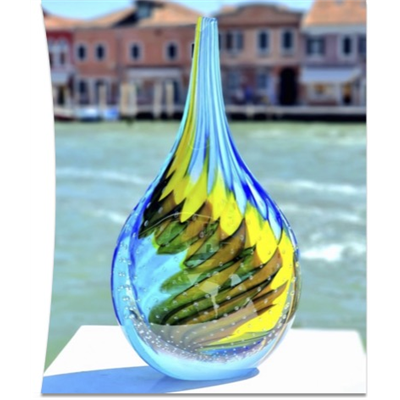 |
Discover the remarkable story of Murano, the small island whose master craftsmen elevated glassmaking into one of the world's most celebrated art forms. Our journey begins with the origins of Venice itself, and the building of the 189 canals created to form the floating city. From there we go to Murano to learn of the many enduring styles of glass, the techniques, and delve into the lives of the ancient artisans whose skill is synonymous with excellence throughout the world. Pic caption : Murano glass, Sommerso With over 35 years in the diamond industry, diamond expert Laurie Wickwire represents the industry across all sectors: mining, sorting, grading and brokering some of the world’s key rough stones. A graduate of GIA London, IGI Antwerp, and DeBeers Institute of Diamonds, Laurie is both a certified diamond grader and certified pearl grader. Laurie’s industry knowledge has seen her working with the BBC and QVC channel, streamed podcasts, as an enrichment lecturer on luxury cruise lines and publishing articles on ocean mining or the British Coronation. She has also created bespoke commissions for the Royal Family. Her love of glass stems from her time studying in Italy and has led to her extensive research on Murano glass. |
|
| Wednesday 10 February 2027 |
| The Gears of Conquest: The Bayeux Tapestry, Norman Horsemen and the advent of Chivalry |
| Dr Tobias Capwell |
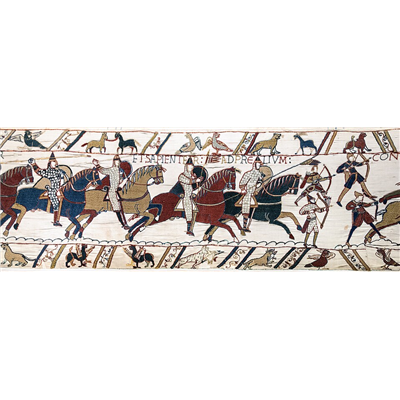 |
The Norman invasion is commonly understood as the stage on which the medieval knight made his spectacular debut, trampling ‘The Dark Ages’ and ushering in ‘The Age of Chivalry’. Whilst true, the reality is more complex. The Bayeux Tapestry employs armoured horsemen as a key visual element, but because Norman arms and armour are not well understood, many of the subtleties of the ‘tapestry’ have been overlooked. This lecture delves into the realities of war at that time to help us better appreciate it. Pic caption: Bayeux Tapestry, Scene 51 Dr Toby Capwell is an independent scholar and leading authority on medieval and Renaissance arms and armour. Over the last thirty years he has worked with many of the world's great collections, including the Imperial Armoury in Vienna, the Metropolitan Museum of Art in New York, and the Royal Armouries in Leeds, and has served as curator of Glasgow Museums and the Wallace Collection, where he worked for sixteen years until January 2023. He is a Fellow of the Society of Antiquaries and a Freeman of the Worshipful Company of Armourers in London. He is the author of many books on armour, weapons and tournaments, has curated numerous exhibitions, and frequently appears in film, television and online media. |
|
| Wednesday 10 March 2027 |
| Masters and Moderns: Method, Mess and the Materials of art |
| Alice White |
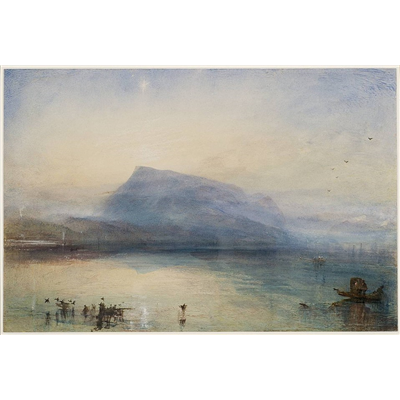 |
This lecture gives us an artist’s perspective on famous works from the 17th to 21st centuries. We will see Turner and Rembrandt revealed as artistic risk takers, whose new glazes, surfaces and pigments redefined the language of painting, leading the way for modern artists such as Pollock and Fontana. Explore the mess and methodology of the creative processes: from broken brushes to smudged thumbmarks, raw pigments and slashed canvasses and uncover a new angle on looking at paintings. Pic Caption: JMW Turner, The Blue Rigi, Sunrise, 1842, Tate Alice White is a professional artist, and a tutor at Central St Martins College of Art (UAL) and University College London. She has provided guest lectures at King's College London, The Art Workers' Guild and the Courtauld Institute of Art. She presented the most recent episode of 'Artfully Said' with BBC's Lachlan Goudie and is author of many essays, including 'A Painter's Perspective’, ‘An American Artist in Europe’ and ‘Ways to Look at Painting’. Alice’s solo show 'A New Wave' documented her year’s residency as Artist for Animals at ZSL London Zoo. Recent projects include 'The Art of Science' (Scott Polar Institute, University of Cambridge 2021). She regularly exhibits at the Mall Galleries in London. |
|
| Wednesday 14 April 2027 |
| Tinker, Tailor, Artist, Spy: Sir Peter Paul Rubens as a Diplomat and Agent |
| Matthew Wilson |
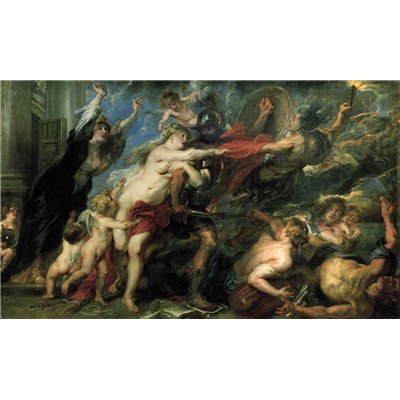 |
Rubens was not only the most influential painter of his period but also a high-ranking diplomat, spy and negotiator. During his prestigious career, he travelled throughout Europe, was esteemed by the mightiest kings and queens of the age, and his career as an artist was an excellent cover for covert summits and meetings. Uniquely Rubens not only depicted the great events of his age but helped to shape them. You will never look at his art in the same way again. Pic caption: Peter Paul Rubens, The Consequences of War, 1638-1639, Pitti Palace Matthew studied History of Art at the Courtauld Institute and is an author, lecturer, and educator. As a freelance journalist he writes for numerous publications including BBC Culture, The Spectator, The Economist and Aesthetica Magazine. He has written two books on symbolism – ‘Symbols in Art’ (Thames & Hudson, 2020) and ‘The Hidden Language of Symbols’ (Thames & Hudson 2022) and his latest book is 'Art Unpacked' - a fully illustrated introduction to understanding art (Thames & Hudson 2023). |
|
| Wednesday 12 May 2027 |
| Reimagining the nation: 19th century Danish landscapes |
| James Vaux |
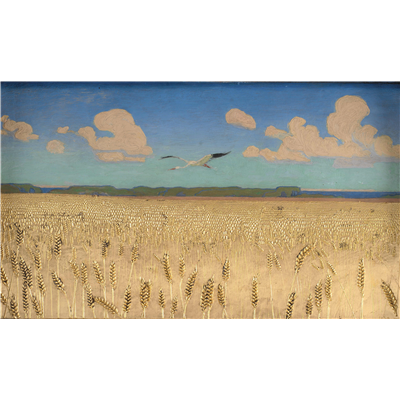 |
In the 19th century, Denmark lost power and territory but produced its finest art. This lecture examines how the Danes used landscape art to re-imagine their new country and charts its rise as a major genre, featuring paintings from Denmark's Golden Age to those of its famous Skagen School. We explore how new motifs and styles were introduced and consider different ways of interpreting landscapes. For those unfamiliar with Danish artists, prepare for a revelation. Pic caption: Harald Slott-Møller, Danish Landscape, 1891, Statens Museum for Kunst, Copenhagen James Vaux is a researcher and lecturer specialising in Nordic arts, culture, design and history. For the past two years he has been travelling across the Nordics, visiting and researching the homes and colonies of artists, writers, designers and musicians to provide first hand insights into their lives and works. James took a law degree at Oxford and qualified as a solicitor before switching career. As a managing director of the international bank Rothschild & Co, he set up and ran the bank’s Nordic operations, living and working in Scandinavia and immersing himself in the countries’ arts, culture and history. James then gained an MA at UCL in Scandinavian Studies and studied interior design and art history at the Inchbald School, Mid-Century Modern at Sotheby’s Institute and electronic music at Point Blank. |
|
| Wednesday 9 June 2027 |
| Thomas Gainsborough, a life: 'Surprising resemblance and perfection' |
| Dr Matthew Morgan |
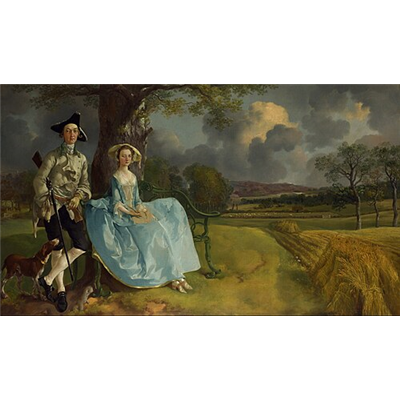 |
Gainsborough was unquestionably one of the greatest portrait painters that Britain has ever produced. His ability to capture the inner lives of his sitters, dramatic use of paint and his remarkable approach to colour set him apart. Yet, although one of the pre-eminent portrait painters of his day, the genre that he truly loved was landscape. In this lecture, for his 300th anniversary year, we will look at his life, work and fraught relationship with portraiture. Pic caption: Thomas Gainsborough, Mr and Mrs Andrews, c1750, National Gallery Dr Matthew Morgan has lectured widely across Britain and Europe, for universities, the National Gallery, the Royal Collection, the Wallace Collection, the Courtauld Institute and the Victoria and Albert Museum. His degree is from Cambridge, and he has an MA from the Courtauld and PhD from Birkbeck, University of London. He was museum Director of Turner’s House in Twickenham for many years. At the National Gallery, he devised and delivered a wide range of learning events, and earlier in his career I worked as a Director in the Valuations Department at Christie’s. Beyond museums, he has contributed to TV documentaries, podcasts, and radio programmes, and created a series of short films about paintings available on YouTube. |
|
| Wednesday 8 September 2027 |
| There's more to life than Lowry: Painting in Northern Britain in the 20th century |
| Ed Williams |
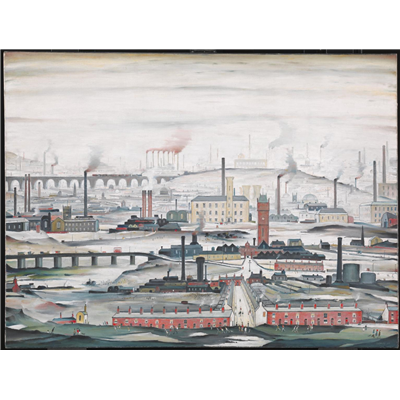 |
Lowry’s works are perhaps the most immediately familiar of any ‘provincial’ British painter, but his popularity has perhaps cast a shadow over those contemporaries active in Northern Britain around the same time. Who were these often-forgotten artists, who sought to challenge conventional wisdom, embraced modernism and recognised the urban and natural landscapes of the North? Offering an alternative vision, they invite us to consider that it might not be so grim up North! Pic caption: L.S. Lowry, Industrial Landscape, 1955, Oil on Canvas, TATE. Ed Williams is based in the Northwest of England, and is an Oxford educated Art Historian. He works at TATE Liverpool, delivering tours and talks on the collection and special exhibitions. He is also an official Green Badge Tour Guide for North Wales. In addition to leading tours Ed teaches the History of Art at the University of Liverpool, where he specialises in teaching adult learners at the Department of Continuing Education. He regularly gives lectures to specialist interest groups and societies and is a member of the International Association of Art Critics. His work has been published in several journals and online publications. |
|
| Wednesday 13 October 2027 |
| Opium - seduction, greed and art |
| Amanda Herries |
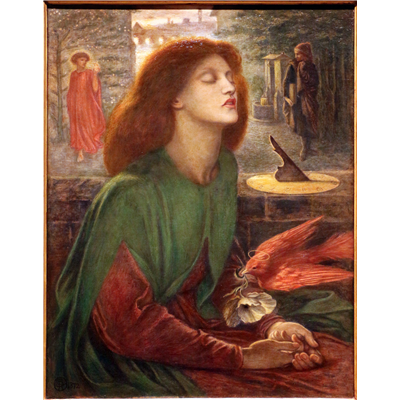 |
The source of dreams, a hypnotic bringer of sleep, delightful lethargy and relief from pain; Opium (from the greek ‘opion’ – poppy juice) is also highly addictive. Greed led to its introduction first to China, and then to Europe. The beguiling seduction of its effects led not only to its use to quieten troubled minds and calm agitated children but led to the creation of great works in music, art and literature. Social and art history meet in this lecture. Pic caption: Dante Gabriel Rossetti, Beata Beatrix c.1871-2, Art Institute of Chicago A graduate of Cambridge University, Amanda worked as a Curator at Museum of London specialising in the decorative arts 1714 to present day. She moved with her family to Japan, lecturing and writing on Oriental / Western cross-cultural and artistic influences. On returning to Britain, she was involved with fundraising for arts companies, writing, lecturing and guiding tours to Japan. She is an author of many publications on Japanese plant and garden influences in the West. Her most recent publication is on the life and work of Sir Henry Raeburn (2024). Currently she is preparing an exhibition for 2026 on the Scottish Colourist S.J. Peploe. |
|
| Wednesday 10 November 2027 |
| Art in Antarctica: Heroes of the ice |
| Dr Henrietta Hammant |
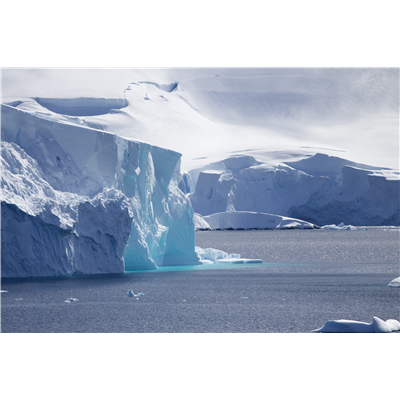 |
For as long as people have been exploring Antarctica, they have made art to help them understand and share their discoveries. Some of the earliest artistic responses to the icy continent are watercolours and photographs, blending scientific documentation with creative interpretation. This lecture uncovers the men behind some of the earliest, and most iconic, images of Antarctica and asks how these artistic representations shape the heroic narratives surrounding its early explorers. Pic caption: The Antarctic Peninsula. Photo: H Hammant Henrietta Hammant is a museum anthropologist. She holds degrees in Archaeology and Anthropology from the University of Cambridge, and Visual, Material and Museum Anthropology from the University of Oxford. Recently, she has completed her PhD in the Anthropology of Heritage at the University of Reading, with a focus on Heroic Age Antarctic explorers and their representation in British museums. She has worked in museums across Canada and the UK, including as Assistant Curator at the Itsanitaq Museum in Churchill, Manitoba, and Collections Coordinator at the Polar Museum, part of the Scott Polar Research Institute in Cambridge. She has visited Antarctic twice as a cruise ship lecturer. She is now an Impact Fellow at the University of Nottingham, working to decolonise Nottingham City Museums and Galleries’ collection of North American ethnographic objects. |
|
| Wednesday 8 December 2027 |
| Antonio Stradivari: 3 violins and a genius |
| Toby Faber |
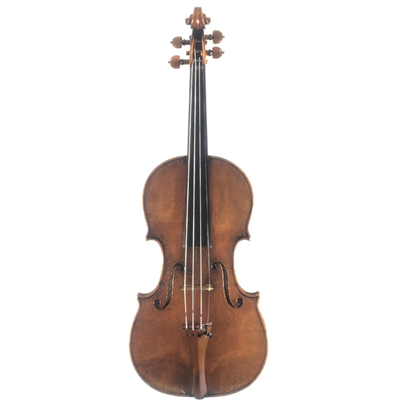 |
250 years after Antonio Stradivari’s death, his violins and cellos remain the most highly prized instruments in the world. Loved by great musicians and capable of fetching fabulous sums when sold. Their tone and beauty are legendary. Every subsequent violin-maker has tried to match them. Not one has succeeded. How can that be? This lecture explores that central mystery. We overview Stradivari's life and methods and follow the stories of three extraordinary violins up to the present day. Pic caption: The Bruce-Viotti Stradivarius, 1709 Toby is an experienced lecturer and public speaker who has been accredited by The Arts Society since 2012. His career began with Natural Sciences at Cambridge and has been through investment banking, management consulting and five years as managing director of the publishing company founded by his grandfather, Faber and Faber, where he remains on the board. He is also non-executive Chairman of its sister company, Faber Music and a director of Liverpool University Press. Toby has written three narrative histories: Stradivarius – Five Violins, One Cello and a Genius; Faberge’s Eggs; and Faber & Faber – The Untold Story, as well as a novel, Close to the Edge. Of these, only the obvious one is published by the family firm. |
|